Understanding Contact: What Your Horse Is Actually Telling You Through the Reins
If there is one topic in horse training that creates more confusion than almost any other, it is contact.
Riders often hear phrases like “ride into the contact,” “soften your hands,” or “put the horse on the bit,” but few concepts are misunderstood as frequently—or practiced as inconsistently.
The objective here is simple: contact is not about holding your horse’s head in a certain position. It is about creating a balanced, elastic conversation between horse and rider.
When contact is correct, the horse feels lighter—not heavier. Movement becomes easier—not restricted. Communication becomes quieter and more precise.
And once riders truly understand contact, almost every other aspect of training improves.
First: Contact Is Not Rein Pressure
One of the most common misconceptions is that contact means pulling.
It does not.
From a biomechanical perspective, correct contact begins behind the saddle—not in front of it.
Your horse creates energy from the hindquarters. That energy travels through a supple back, reaches the rider’s seat and hands, and returns through a steady rein connection.
Think of the reins less like steering ropes and more like a telephone line.
The horse speaks.
The rider listens.
The rider responds.
The conversation should remain open both directions.
When riders attempt to create contact only with their hands, the result is usually one of three things:
- The horse drops behind the bit and disconnects.
- The horse braces and becomes heavy.
- The horse shortens the neck and loses impulsion.
None of these are true contact.
What Correct Contact Actually Feels Like
Riders often ask: How much pressure should I feel?
A better question is:
How alive does the connection feel?
Correct contact typically feels:
✓ Consistent but elastic
✓ Present without heaviness
✓ Equal in both reins
✓ Responsive to tiny changes
✓ Supported from the leg
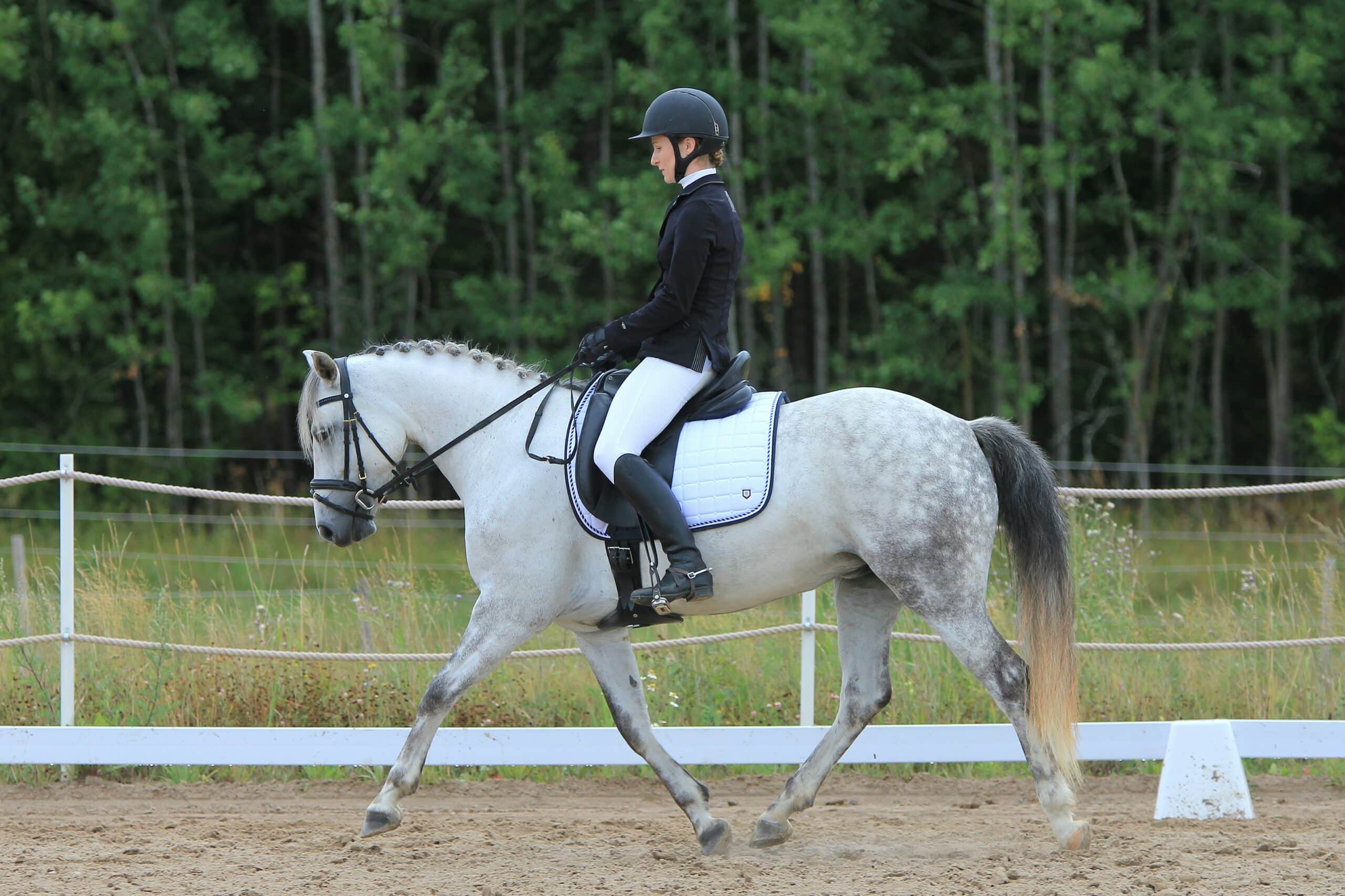
You should feel as though your horse is gently reaching toward your hands—not that you are carrying the front end.
If the horse suddenly disappeared underneath you and you fell backward from releasing the reins, there was likely too much hand and not enough self-carriage.
The Three Ingredients of Good Contact
1. Forward Energy
No energy means no contact. Many riders try to fix rein connection by adjusting their hands when the real issue is insufficient engagement from behind. A horse moving with activity and purpose naturally seeks connection. Without forward intention, riders end up holding the horse together.
2. Elastic Arms
Contact should never become rigid. Your elbows are suspension systems. As your horse moves, your arm follows—allowing motion without losing connection. A locked elbow creates inconsistent rein pressure even if the hand itself appears quiet. Consistency is key here.
3. Balance and Self-Carriage
The goal is never dependence. Good contact teaches the horse to organize their own body. Over time, the horse should become lighter because balance improves—not because rein pressure increases. The best horses often feel deceptively easy because they are carrying themselves.
Signs Contact Is Breaking Down
Pay attention to these common indicators:
Too Much Hand
- Heavy in the reins
- Neck shortened
- Resistance in transitions
- Head tossing
- Leaning
Too Little Connection
- Hollow back
- Inconsistent frame
- Drifting shoulders
- Loss of rhythm
- Frequent rein adjustments
Uneven Contact
- One rein feels heavier
- Crookedness
- Falling through turns
- Difficulty bending
These symptoms are information—not problems to force. Ask why before trying to fix what.
Exercises to Improve Contact
Transition Within the Gait
Ride several strides of a slightly more forward working trot. Then slightly collect. Repeat. Your goal is maintaining the same rein feel while changing stride length.
The Give-and-Retake Test
For two or three strides, soften both reins slightly. Does your horse maintain balance? If yes, the horse is carrying themselves. If no, revisit forward energy and balance.
Ride From Leg Into Hand
Apply leg first. Allow the hand to receive. Never reverse the order. This exercise alone changes how many riders think about connection.
The Advanced Truth About Contact
At higher levels of training, contact becomes increasingly invisible. The rider does not disappear. The aids become quieter because the horse becomes more educated. Beautiful contact is not measured by headset. It shows up in rhythm, relaxation, suppleness, straightness, and ultimately collection. That is why two horses can carry their necks completely differently and still both be correctly connected. The objective here is not appearance. It is communication. And when that conversation becomes clear, everything else begins to feel easier.