Developing a Consistent Stop and Rollback: Foundations for Performance Horses
A great stop and rollback don’t happen by accident. They are built through balance, softness, and consistency. Learn the foundational exercises that help performance horses respond with confidence and precision.
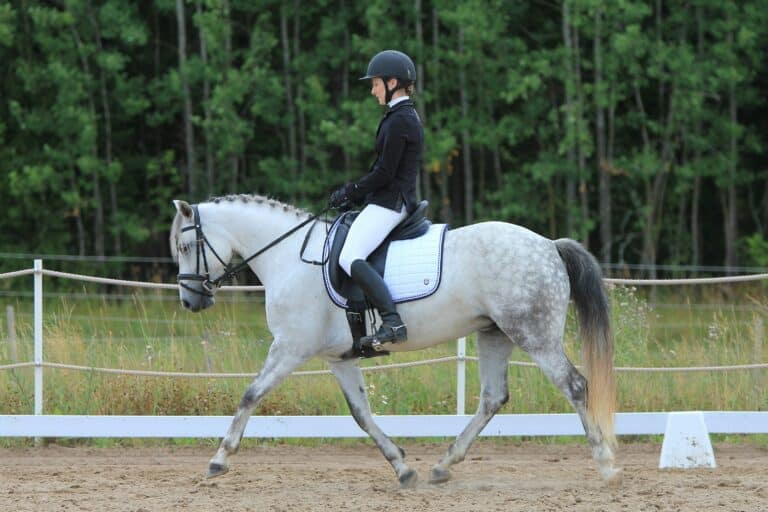
Watch a great reining, ranch riding, or working cow horse, and one thing becomes immediately apparent.
The stop looks effortless.
The rollback is crisp.
The horse stays balanced, soft, and ready for the next maneuver without hesitation.
What many people don’t see are the hundreds of quiet, consistent training sessions that created those moments.
If you want a stop and rollback that holds up in the show pen—or simply creates a more responsive riding horse—it doesn’t start with speed.
It starts with fundamentals.
Balance Comes Before Brakes
One of the biggest mistakes riders make is trying to create a bigger stop before developing better balance.
A horse that is heavy on the forehand can’t stop correctly.
Instead of rocking back onto the hindquarters, the horse braces through the shoulders and pulls itself to a stop with the front legs.
That creates rough, inconsistent stops and makes a clean rollback nearly impossible.
Before asking for a stronger stop, make sure your horse can:
- Travel with rhythm and relaxation
- Carry weight on the hindquarters
- Stay soft through the neck and poll
- Respond promptly to seat and leg aids
- Maintain straightness
Without these pieces, bigger cues rarely produce better results.
Build the Stop One Step at a Time
If you want it to hold up in the pen, every stop should look the same.
Start at the walk.
Teach your horse to respond to your seat before relying on your hands.
As your horse understands the cue, progress to the jog and then the lope.
Consistency is far more important than intensity.
A horse that quietly stops every time from the walk is building habits that will carry into higher speeds later.
Straightness Is Non-Negotiable
A horse that drifts through the stop will struggle during the rollback.
Pay attention to both shoulders and hips.
If one shoulder consistently falls out or the hindquarters swing to one side, address that before increasing speed.
Simple exercises like riding straight lines between markers or stopping along a fence can help reinforce alignment.
Straight horses stop more efficiently and roll back with greater confidence.
The Rollback Starts Before the Turn
Many riders think the rollback begins when the horse pivots.
In reality, it begins with the quality of the stop.
A balanced stop leaves the horse prepared to immediately shift direction.
A horse that finishes the stop leaning on the front end must first regain balance before turning.
That hesitation costs both time and precision.
Instead of rushing the turn, reward your horse for stopping correctly first.
The rollback will become smoother as balance improves.
Keep the Feet Moving
One common training mistake is allowing the horse to become stuck after stopping.
The rollback should be a fluid change of direction—not a pause followed by a scramble.
As soon as the stop is complete and the horse remains balanced, ask for the turn with clear, consistent cues.
Avoid pulling the horse around with the reins.
Instead, guide the shoulders while encouraging the hindquarters to stay engaged underneath the body.
Quality Over Quantity
It’s tempting to repeat stops over and over in a single training session.
Unfortunately, fatigue often leads to poorer execution.
When technique begins to decline, learning slows down.
A handful of excellent repetitions teaches far more than dozens of average ones.
Finish while your horse is still fresh and successful.
The next session will usually begin where the last successful one ended.
Stay Soft Through the Entire Maneuver
Softness doesn’t end when the horse stops.
If anything, it’s even more important during the transition into the rollback.
Heavy rein pressure often causes horses to brace, lift the head, or lose balance.
Instead, think about guiding your horse rather than forcing the movement.
A horse that remains soft throughout the maneuver develops confidence and consistency over time.
Build Confidence Before Adding Speed
One of the easiest ways to create anxiety is by asking for speed before understanding.
A horse that feels rushed often begins anticipating, bracing, or resisting.
Take the time to let your horse fully understand each piece of the maneuver.
When the fundamentals are solid, speed becomes a natural result rather than something you have to chase.
Small Details Create Big Results
Many successful performance horses don’t differ dramatically from average horses in talent.
They differ in consistency.
The rider pays attention to small details every day:
- Straight approaches
- Soft transitions
- Balanced stops
- Quiet hands
- Responsive hindquarters
- Consistent timing
Those details accumulate over weeks and months until they become second nature.
Excellence Is Built One Ride at a Time
From the outside, an exceptional stop and rollback can look effortless.
In reality, they’re the product of patient, thoughtful training built on clear communication and repetition.
If you’re serious about developing a maneuver that stands up under pressure, don’t focus on making it spectacular overnight.
Focus on making it correct.
This comes down to consistency.
When your horse understands the cues, stays balanced, and remains confident, every stop becomes more dependable, every rollback becomes smoother, and every ride builds toward the next level of performance.