How to Read Your Horse’s Body Language Before Problems Start
One of the most common things I hear from riders after a horse spooks, refuses a jump, or reacts unexpectedly is:
“He didn’t give me any warning.”
Most of the time, that’s not actually true.
Horses are constantly communicating through their posture, facial expressions, movement, and muscle tension. The challenge isn’t that they aren’t talking—it’s that we haven’t learned to recognize the conversation yet.
Consistency is key here. The more time you spend observing your horse’s normal behavior, the easier it becomes to notice when something changes. Often, those subtle changes are your earliest opportunity to prevent a problem before it develops.
Start with the Whole Horse
Many people focus on a horse’s ears, but body language is much bigger than that.
Before interacting with your horse, take a few seconds to look at the entire picture.
Ask yourself:
- Does your horse look relaxed or tense?
- Is the head carried naturally?
- Is the body soft or rigid?
- Is weight evenly distributed?
- Does your horse seem curious, worried, distracted, or uncomfortable?
A relaxed horse appears loose and balanced. A concerned horse often looks tight through the neck, back, and shoulders long before any obvious behavior occurs.
The Eyes Tell You More Than You Think
A horse’s eyes reveal a tremendous amount about how they’re feeling.
A soft, relaxed eye usually indicates comfort and confidence.
A wide eye with visible white can suggest excitement, fear, or uncertainty. While some horses naturally show more white around their eyes than others, a sudden change is worth noticing.
Watch how your horse blinks as well.
Frequent soft blinking often accompanies relaxation, while a fixed, staring expression may indicate heightened alertness.
Ears Are Constantly Gathering Information
We’ve all heard that pinned ears mean an unhappy horse.
That’s certainly true, but ear position offers much more information than simply happy or angry.
Forward ears often indicate curiosity or attention.
One ear on you and one ear elsewhere usually means your horse is processing multiple things at once.
Rapidly flicking ears may signal uncertainty as your horse evaluates the environment.
Pinned ears, especially when paired with a tense body or wrinkled muzzle, deserve immediate attention and should never be ignored.
Watch the Nose and Mouth
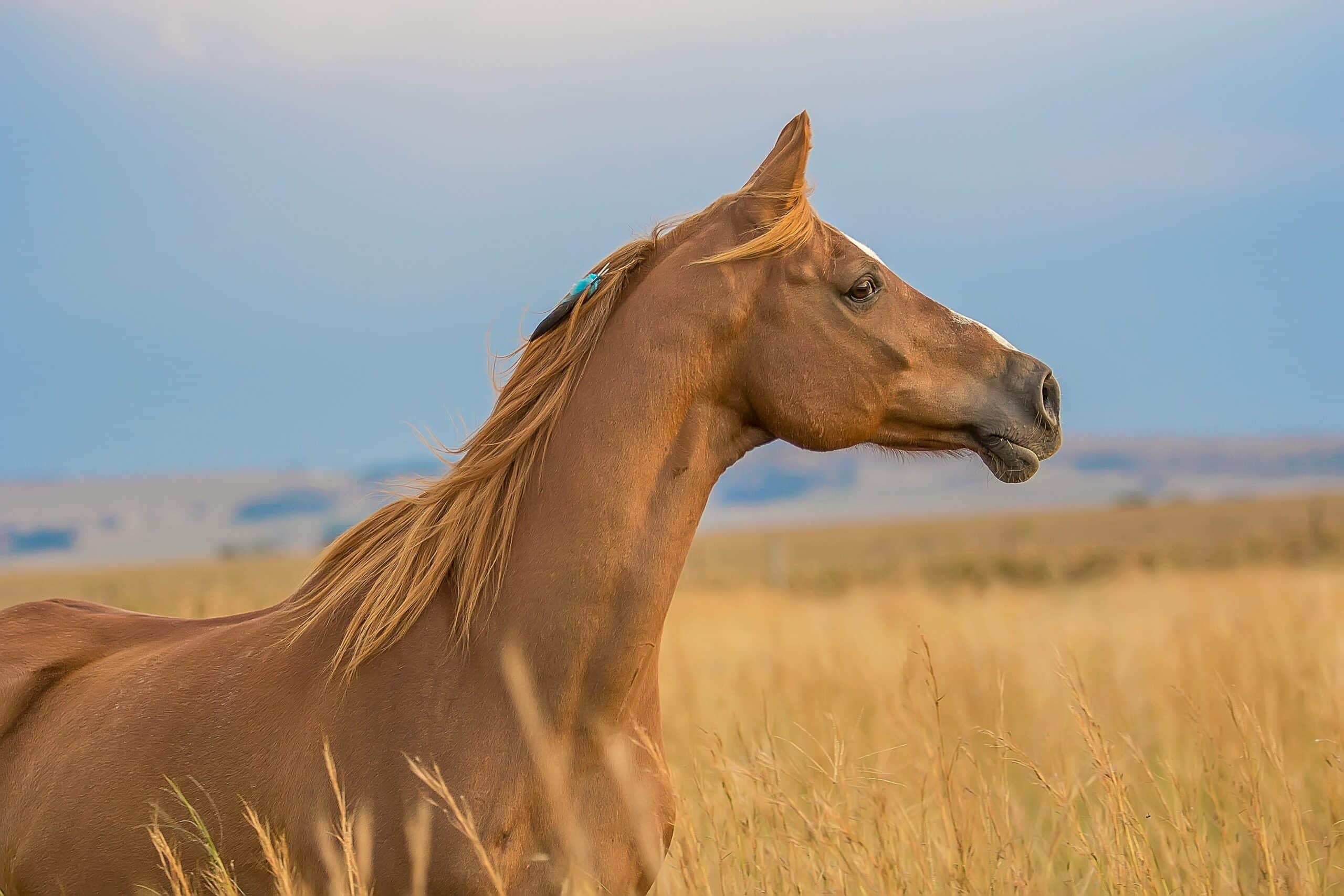
The horse’s muzzle often reflects emotional state.
A relaxed muzzle appears soft with loose lips.
Tension around the nostrils or a tightly closed mouth can indicate stress or discomfort.
Excessive chewing, clamping the jaw, grinding teeth, or repeated mouth opening may suggest anxiety, pain, or confusion during training.
These signs don’t always indicate behavioral problems—they sometimes point toward physical discomfort that deserves investigation.
Pay Attention to Muscle Tension
One of the earliest indicators that something is changing is increased muscle tension.
Notice whether your horse suddenly stiffens through the neck or back.
Does movement become shorter or less fluid?
Does the horse brace against your aids?
These subtle changes often occur before a spook, refusal, or bolt.
Recognizing them gives you an opportunity to redirect your horse’s attention while they’re still thinking instead of reacting.
The Tail Is More Than a Fly Swatter
A gently swinging tail often accompanies a relaxed horse.
A tightly clamped tail can indicate fear or discomfort.
Aggressive tail swishing—especially when combined with pinned ears or resistance—often reflects irritation rather than simply an attempt to chase flies.
Context matters.
A horse standing quietly on a summer afternoon will naturally swish at insects. During grooming, saddling, or riding, sudden changes in tail movement may provide valuable information.
Changes in Breathing Matter
Breathing often changes before visible behavior does.
A horse that suddenly begins taking shallow, rapid breaths may be becoming anxious.
Heavy nostril flaring without physical exertion can also indicate heightened emotional arousal.
Learning your horse’s normal breathing patterns helps you notice when something isn’t quite right.
Context Is Everything
Body language should never be interpreted from a single signal alone.
One pinned ear doesn’t automatically mean aggression.
A raised head doesn’t always mean fear.
Instead, look for combinations of signals.
For example:
- Tight muscles + raised head + fixed stare often indicate concern.
- Soft eyes + lowered neck + relaxed ears usually indicate comfort.
- Tail swishing + pinned ears + tense jaw may suggest irritation or discomfort.
The more pieces of the puzzle you observe together, the more accurate your interpretation becomes.
Learn Your Horse’s Normal
Every horse has an individual personality.
Some naturally carry their heads higher.
Some are more expressive with their ears.
Others have naturally energetic body language.
Rather than comparing your horse to every other horse in the barn, learn what is normal for your horse.
When you know their baseline, small changes become much easier to recognize.
Listening Builds Trust
The best horsemen aren’t simply good trainers.
They’re excellent observers.
They notice the subtle shift in posture before the spook.
They recognize tension before resistance.
They identify discomfort before it becomes a behavioral issue.
From my perspective as a trainer, that’s where real progress begins.
When we learn to listen to what our horses are already telling us, we create safer rides, more effective training sessions, and stronger partnerships built on understanding instead of correction.
Our horses communicate with us every single day.
The objective isn’t to make them louder.
It’s to become better listeners.